
The Bukit Peninsula is one of the most famous surf coasts in the world. Its west side is a chain of reef breaks, from the long walls of Uluwatu to the barrels of Padang Padang and Bingin, that light up in the dry season when south-west swells meet offshore trade winds. But most of those waves break over shallow, sharp reef and are no place to learn. This guide sorts the main breaks by level, explains the seasons and tides, and points you to the surf schools and camps that can get you in the water safely.
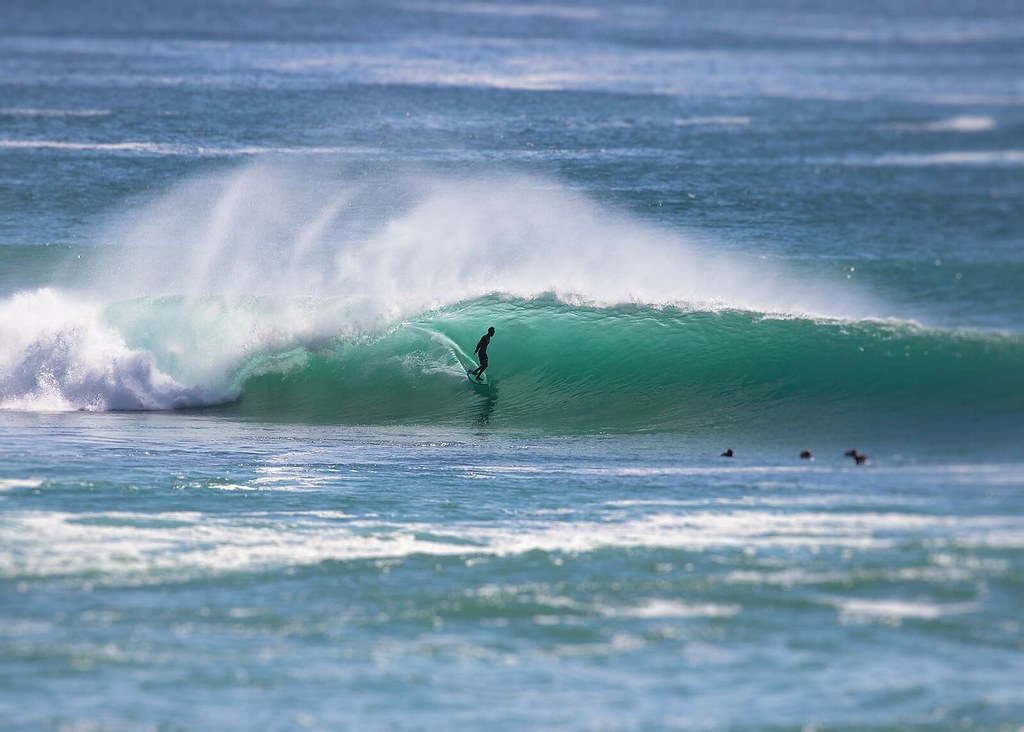 A barrel on the reef at Uluwatu, the Bukit's best-known break. Photo: wavehavenbali / Flickr, CC BY 2.0
The short version
- Dry season (roughly April to October) is the west coast's time: Uluwatu, Padang Padang, Bingin, Impossibles and Balangan, with offshore winds and the biggest, most consistent swells.
- Wet season (roughly November to March) brings onshore winds to the west coast; the east-coast reefs around Nusa Dua come into their own.
- Beginners: take lessons at a sand-bottom beach such as Dreamland on a small day, or with a school that drives you to the most suitable spot. Do not paddle out at Uluwatu, Padang Padang or Bingin to learn.
- Intermediates: Balangan, Bingin on a higher tide, the inside sections at Uluwatu on small days and Dreamland's peak.
- Experienced surfers: Uluwatu's main sections, Padang Padang's left, Impossibles, Green Bowl and Nyang Nyang.
 Swell lines stacking up at dusk off Uluwatu. Photo: jordanfischer / Flickr, CC BY 2.0
When to surf: seasons, swell and tide
Bali sits in the path of long-period groundswells generated far to the south-west in the Indian Ocean. In the dry season, roughly April to October, the trade winds blow from the east and south-east, which is offshore for the Bukit's west-facing reefs. That combination is why Uluwatu and its neighbours are famous: clean, organised lines that peel along the reef. It is also the busiest time, especially from June to August.
In the wet season, roughly November to March, the wind tends to swing west and north-west, blowing onshore on the west coast. Surf is still possible in the early mornings and on calm days, but the reliable option is to go to the east side of the peninsula, where the Nusa Dua reef is described as Bali's most consistent right-hand reef break. Many surf schools and camps shuttle guests to whichever side is working.
Tides matter as much as swell. Each reef break works best on a particular tide, and several become dangerously shallow at low tide. Check a surf forecast and tide chart every day, ask at the surf shop or your camp, and watch the break for a while before you paddle out.
 The cliffside warungs above the Uluwatu reef. Photo: EladeManu / Flickr, CC BY 2.0
The breaks, north to south
Dreamland (New Kuta Beach): beginners and improvers
Dreamland is a sand-bottom beach break, which makes it the most forgiving wave on the west side of the Bukit. Its best wave is an A-frame peak that works at low tide on a decent swell, and it has a punchy shore break, so even here a lesson or an experienced friend is a good idea. Schools such as Dreamland Surf, Malibu Surf School, Dawn Patrol and Surf With Tee work this end of the peninsula.
Balangan: intermediates
Balangan is a fun left-hand reef break off the southern end of Balangan beach. It is not as fast or as hollow as the other Bukit reefs, which makes it a good step up for intermediates who can already turn and read a lineup. It is still reef, so wear booties if you are unsure and avoid the lowest tides.
Bingin: intermediate to advanced
Bingin is a short, hollow left that is often described as one of the best places on the island to practise riding barrels. At low tide it is very shallow and for experts only; on a higher tide it breaks more softly and can suit capable intermediates and longboarders. It gets crowded quickly, and rides are short, so lineup etiquette matters. Beach access has changed since the 2025 demolitions; see our beaches guide.
Impossibles: advanced
Between Bingin and Padang Padang, Impossibles is a long, fast left with several peaks spread along a wide, shallow reef shelf. With good size and offshore wind the sections can link up into a very long ride, but they often close out, which is how it got its name. Strictly for experienced surfers.
Padang Padang: experts (and a gentler right)
The Padang Padang left is known as the Balinese Pipeline: a very fast, barrelling wave over shallow reef that needs a solid swell to break properly and is widely regarded as the most serious wave in Bali. It is home to the Rip Curl Cup Padang Padang, an invitational tube-riding contest held in the dry season when conditions line up. On the other side of the channel there is a smaller right that is far more manageable, but it is still a reef and still crowded. Surf camps on the Labuan Sait strip, such as Padang Padang Surf Camp, Kima Surf Camp, Bombora Surf Camp and CARI Surf Camp, can advise on the right spot for your level each day.
Uluwatu: advanced, with sections for every swell
Uluwatu is not one wave but several, each working on different tides and swell sizes. Among the best known:
- The Peak: the most consistent section, with a shifting take-off and a tight, narrow pocket.
- Racetracks: a fast, steep section that runs onto a shallow reef shelf, notorious on the lower tides.
- Outside Corner: the famous long wall that comes alive on big swells and is easy to watch from the clifftop bars.
- Temples: a punchy left further south that picks up more swell than the other sections.
- The Bombie: an outer reef that only breaks on the biggest days, for very experienced big-wave surfers.
You reach the lineup from Suluban (Blue Point) beach, down the stairs and out through the cave, then across the reef. Getting back in through the cave on a rising tide and a big swell is a skill in itself: watch where the locals come in before you paddle out. Uluwatu is crowded almost every day in season. Board hire, ding repair and Uluwatu Surf School are all on or near the cliff, and camps such as Tregge and LoTide are close by.
Nyang Nyang and Green Bowl: experienced surfers
On the south coast, Nyang Nyang picks up south swells that miss the west-coast reefs, so it is reliable but less perfectly shaped, with strong rips. It is for confident intermediates and above, and getting there involves a long walk down and back up the cliff. Green Bowl, further east, is a thick right-hander that is often big and powerful, with strong currents; go early, before the wind, and only if you are experienced. Rapture Surfcamp Green Bowl is based nearby.
Nusa Dua and the east coast: wet-season reefs
Nusa Dua's offshore reef is a consistent right that rarely goes flat and is often crowded; mornings are usually best. Further north, the reefs off Tanjung Benoa work in similar conditions. These breaks are reached by boat or a long paddle, so go with a local guide or a school the first time. In Jimbaran, Tropicsurf at Four Seasons Jimbaran Bay runs coaching and guided surf trips.
Lessons, guides and board hire
- Lessons: group and private lessons usually include a board, rash vest and transport to a suitable beach. Ask how many students there are per instructor and where they will take you on the day.
- Surf guiding: if you are a competent surfer new to Bali, a guide for your first few sessions will show you entry and exit points, which section suits the tide and how the local lineup works.
- Board hire: available on the Uluwatu cliff, along the Labuan Sait road and at Dreamland and Balangan. Many scooter rentals come with surf racks.
- Surf camps: the Bukit has dozens, from party hostels to coaching-focused camps. Browse them all on our surf page.
Prices vary by season, group size and transport. Ask for a written price that includes board and transfers, and check before you book.
Safety and etiquette
- Reef cuts: coral cuts get infected easily in the tropics. Clean them thoroughly with fresh water and antiseptic and keep them dry; booties help on shallow reefs.
- Know your limits: if you are not sure you can get back in through the cave or over the reef on the tide that is coming, do not go out.
- Lineup rules: the surfer closest to the peak has priority; do not drop in or snake. Local surfers and regulars set the tone, so be patient and polite.
- Sun: the tropical sun is intense. Use a reef-safe sunscreen, a rash vest and a hat between sessions.
- Insurance: make sure your travel insurance covers surfing and scooter riding.
Plan the rest of your trip
For surf, base yourself close to the breaks: Padang Padang and Labuan Sait, Bingin or Uluwatu and Suluban for the west-coast reefs, Balangan and Dreamland for gentler waves, or Nusa Dua in the wet season. Browse places to stay and yoga and recovery for rest days, or see everything on the Uluwatu map.
Last checked in November 2026. Surf conditions change daily; check a forecast and ask locally before paddling out.


